The landmark Iran nuclear agreement, technically known as the Joint Comprehensive Plan of Action (JCPOA), was struck in July 2015 by Iran, major international powers, and the United States. In exchange for sanctions relief worth billions of dollars, Iran pledged to destroy a significant portion of its nuclear programme and to make its sites more accessible to foreign inspectors.

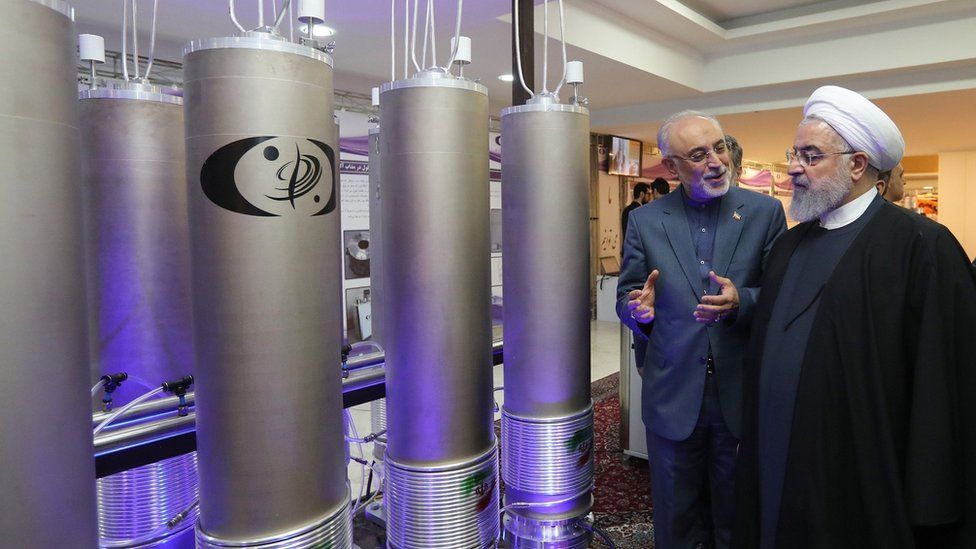
Proponents of the agreement stated that it would lower the likelihood of violence between Iran and its regional enemies, particularly Israel and Saudi Arabia, by preventing a resurgence of Iran's nuclear weapons development. Since President Donald Trump removed the United States from the agreement in 2018, the agreement has been in risk. Iran has resumed some nuclear activity in retribution for the U.S. withdrawal and for lethal assaults on prominent Iranians in 2020, including those conducted by the U.S.
President Joe Biden stated that the United States would return to the agreement in 2021 if Iran returned to compliance. Renewed diplomacy initially appeared promising, but following sporadic negotiations, it is uncertain whether the sides can reach an accord.
Who are the attendees?
The JCPOA, which became effective in January 2016, restricts Iran's civilian nuclear enrichment programme. The five permanent members of the UN Security Council (China, France, Russia, the United Kingdom, and the United States) plus Germany (together known as the P5+1) were at the centre of negotiations with Iran. The European Union was also present.
Some Middle Eastern states, including as Saudi Arabia, argued that they should have been consulted or invited to participate in the negotiations because they would be the most impacted by an Iran with nuclear weapons. Israel vehemently opposed the accord, arguing that it was too permissive.
What were the objectives?
The P5+1 hoped to dismantle Iran's nuclear programme to the extent that if Tehran opted to seek a nuclear bomb, it would take at least a year, allowing international powers time to respond. Prior to the JCPOA negotiations, U.S. intelligence authorities assessed that Iran could build enough nuclear material for a bomb within a few months if no agreement was reached. Negotiating nations concerned that Iran's efforts to become a nuclear weapons state could precipitate a new crisis in the region. Israel had launched preemptive military action against suspected nuclear sites in Iraq and Syria, and it could do the same against Iran, possibly provoking retaliation from Hezbollah in Lebanon or problems in the Persian Gulf oil supply. In addition, Saudi Arabia has declared its willingness to acquire a nuclear weapon if Iran is able to successfully explode one.
As a signatory of the Nuclear Nonproliferation Treaty, which has been in effect since 1970, Iran has previously promised to refrain from developing nuclear weapons. However, following the 1979 collapse of the Pahlavi regime, Iranian elites pursued this technology in secret. (In 2007, U.S. intelligence experts determined that Iran ceased work on nuclear weapons in 2003 but continued to collect nuclear technology and experience),
Prior to the JCPOA, the P5+1 had spent years negotiating with Iran, giving its government a variety of inducements to cease uranium enrichment. After the 2013 election of reformist President Hassan Rouhani, the parties reached a preliminary agreement to guide negotiations for a broader agreement.
Iran, for its part, sought respite from international sanctions, which deprived its economy of over $100 billion in income in 2012–2014 alone.
Does it impede Iran's acquisition of nuclear weapons?
According to a number of experts, if all parties had stuck to their commitments, the agreement would have almost likely been able to fulfil this objective for more than a decade. Many of the JCPOA's nuclear programme prohibitions have expiration dates. For instance, after ten years (beginning in January 2016), centrifuge restrictions will be eliminated, and after fifteen years, Iran will no longer be restricted in its possession of low-enriched uranium. Some of the deal's opponents criticised the so-called sunset provisions, arguing that they would just delay Iran's bomb development, while sanctions relief would enable Iran to fund terrorism in the region.
What was Iran's agreement?
Nuclear limitations. Iran pledged not to create either plutonium or highly enriched uranium that may be used in nuclear weapons. It also took measures to ensure that its Fordow, Natanz, and Arak sites engaged only in civilian activities, including as industrial and medical research.
The agreement restricts the number and types of centrifuges Iran can operate, its enrichment level, and the quantity of its enriched uranium stockpile. (Mined uranium has less than 1% of the uranium-235 isotope utilised in fission reactions; centrifuges increase the concentration of this isotope. Uranium enriched to 5 percent is employed in nuclear power plants, whereas uranium enriched to 20 percent is suitable for research reactors and medical applications. Ninety percent enriched uranium is utilised in nuclear bombs.)
Observation and verification Iran promised to eventually follow a procedure that would let inspectors from the International Atomic Energy Agency (IAEA), the United Nations' nuclear watchdog, unrestricted access to its nuclear facilities, including potentially undeclared sites. The purpose of inspections is to prevent Iran from developing nuclear weapons in covertly, as it purportedly attempted in the past. The IAEA has produced quarterly reports to its board of governors and the United Nations Security Council regarding Iran's compliance with its nuclear obligations.
The implementation of the agreement is monitored and potential disagreements are resolved by the Joint Commission, which consists of representatives of all parties to the negotiations. IAEA inspectors can acquire access to questionable, undeclared installations with a majority vote from the organization's members. Additionally, the organisation supervises the transfer of nuclear-related or dual-use materials.
What conditions did the other signatories accept?
Sanctions relief. The European Union, the United Nations, and the United States have all pledged to easing Iran's nuclear-related sanctions. Many other U.S. sanctions against Iran, some dating back to the 1979 hostage crisis, remained in place. The topics include Iran's ballistic missile programme, assistance for terrorist groups, and violations of human rights. Although the United States pledged to relax sanctions on oil exports, it maintained limitations on financial activities that have discouraged foreign trade with Iran.
Weapons embargo. The parties agreed to lift the existing UN prohibition on Iran's export of conventional weapons and ballistic missiles after five years if the IAEA certifies that Iran's only nuclear activity is for peaceful purposes.
How is the Iran accord implemented?
If any signatory suspects Iran of breaking the agreement, the United Nations Security Council may vote on whether or not to maintain sanctions relief. This method stays in operation for ten years, after which the UN sanctions are scheduled to be lifted permanently.
The United States stated its plan to reinstate sanctions in April 2020. The other countries of the P5 protested to the idea, stating that the United States could not independently execute the mechanism due to its 2018 withdrawal from the nuclear deal.
Did Iran initially comply?
The accord started off rather smoothly. Early in 2016, the IAEA verified that Iran had satisfied its preliminary commitments; in response, the United States, the European Union, and the United Nations repealed or suspended their sanctions. Significantly, the administration of U.S. President Barack Obama lifted secondary restrictions on the oil sector, allowing Iran to increase its oil exports to virtually pre-sanctions levels. The United States and a number of European nations also defroze frozen Iranian assets worth approximately $100 billion.
Since President Trump removed the United States from the agreement in 2018 and reintroduced severe banking and energy sanctions, the pact has been on the verge of failure. Trump asserted that the agreement failed to address Iran's ballistic missile programme and its proxy warfare in the area, and that the accord's sunset clauses would allow Iran to pursue nuclear weapons in the future.
Investigate the Timeline
United States Relations With Iran
Iran accused the United States of abandoning its pledges and criticised Europe for capitulating to American unilateralism. In an effort to preserve the accord, France, Germany, and the United Kingdom established the INSTEX barter system to facilitate transactions with Iran outside of U.S. banking institutions. However, the system only applies to food and medication, which are protected from U.S. sanctions.
Following the U.S. withdrawal, a number of nations, including U.S. allies, continued to import Iranian oil under waivers given by the Trump administration, while Iran remained committed to its obligations. A year later, however, the United States terminated the exemptions in an effort to entirely restrict Iran's oil shipments.
What is the status of Iran's nuclear programme?
Iran began breaching agreed-upon limitations on its stockpile of low-enriched uranium in 2019 and began enriching uranium to higher concentrations in reaction to the other parties' actions, which Tehran claimed constituted violations of the agreement (though still far short of the purity required for weapons). It also began creating additional centrifuges to speed up uranium enrichment, resuming production of heavy water at its Arak plant, and enriching uranium at Fordow, rendering the isotopes generated there useless for medicinal reasons.
Iran took additional moves away from its nuclear commitments in 2020 in response to a series of attacks on its interests. Iran claimed that it will no longer limit its uranium enrichment in January, following the U.S. assassination of a key Iranian general, Qasem Soleimani. It began building a centrifuge production centre at Natanz in October to replace one that had been destroyed by an attack it blamed on Israel several months earlier. And in November, in response to the killing of a renowned nuclear scientist, which Iran also blamed on Israel, its parliament passed a law that significantly increased uranium enrichment at Fordow.
The next year, Iran announced new limitations on the IAEA's capacity to inspect its sites, and shortly thereafter, it terminated its monitoring agreement with the agency.
How has the agreement impacted the Iranian economy?
Prior to the JCPOA, Iran's economy endured years of recession, currency depreciation, and inflation, primarily as a result of sanctions imposed on its energy industry. As Iran recovered trading partners, especially in the EU, inflation dropped, currency rates steadied, and exports soared, especially of oil, agricultural products, and luxury goods. Following the implementation of the JCPOA, Iran began exporting more than 2,1 million barrels per day (approaching pre-2012 levels, when the oil sanctions were originally put in place). However, these advances did not result in a large boost in the budget of the average Iranian family.
The expiry of sanctions waivers for oil exports and the reinstatement of U.S. sanctions in 2018 have severely impacted a major source of government revenue: 80 percent of Iran's exports are oil and petroleum products. Midway through the year 2020, oil shipments have dropped to below 300,000 barrels per day. In addition, the United States put sanctions on eighteen major Iranian banks in October of that year, forcing the Iranian rial to plummet further against the U.S. dollar.
In the meantime, the extensive variety of U.S. sanctions unrelated to the nuclear programme have exacerbated the harm. Multinational corporations fear retaliation from the United States if they conduct business with sanctioned Iranian groups, such as the Islamic Revolutionary Guard Corps (IRGC), which exerts power over numerous businesses. As a result of sanctions discouraging foreign trade, the black market has flourished, benefitting the IRGC at the expense of the conventional economy.

What is the agreement's prognosis?
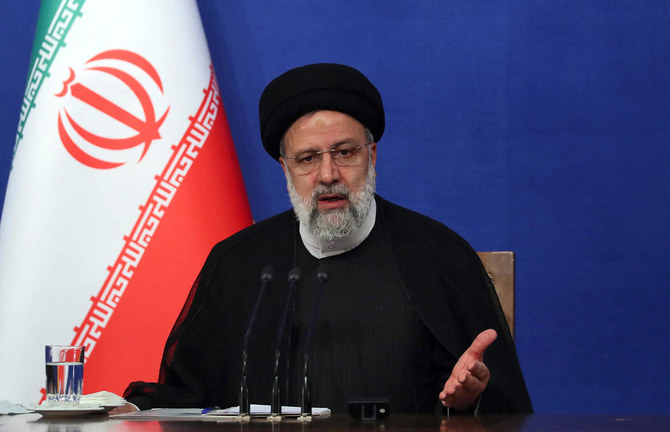
The nuclear agreement's future remains uncertain. In April 2021, JCPOA members initiated talks to get Washington and Tehran back into the agreement, but they have since stalled due to, among other factors, Iran's election of hardline cleric Ebrahim Raisi as president and Russia's invasion of Ukraine. Moreover, Tehran and Washington continue to disagree on a number of matters, including the categorization of the IRGC as a terrorist group. U.S. officials have warned against more delays, stating that further nuclear advancements by Iran could make it impossible to return to the original agreement. President Biden announced in July that the United States will employ "every element of its national might" to prevent Iran from developing a nuclear weapon in response to allegations that the country was mere days away from refining enough uranium for a bomb.
Comments
Post a Comment